
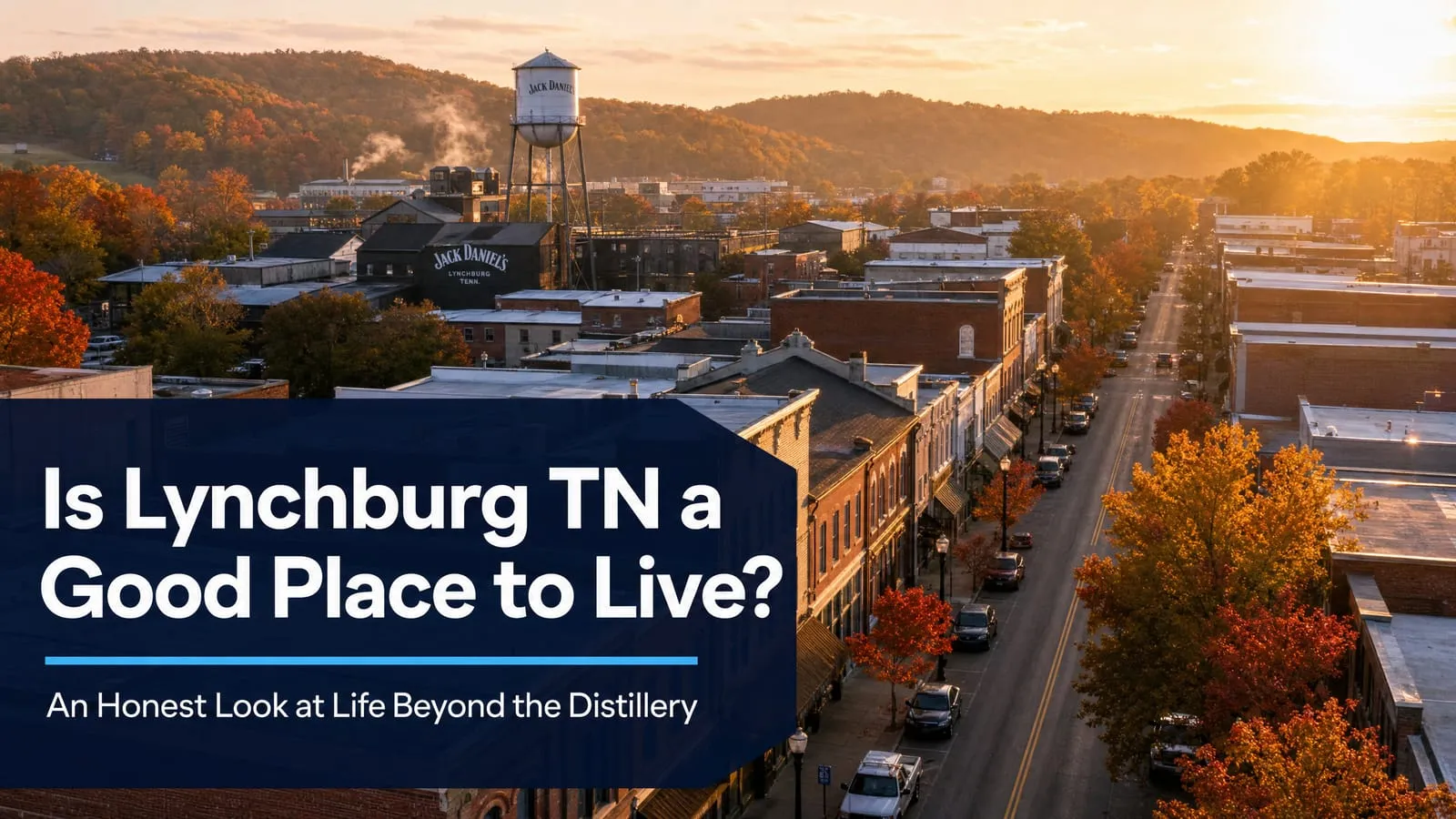

Is Lynchburg TN a Good Place to Live? An Honest Look at Life Beyond the Distillery
So is Lynchburg TN a good place to live? The honest answer for most relocating families is: yes, if you want a specific kind of life — quiet, small, history-rich, lake-adjacent, and willing to drive 25–35 minutes for groceries and most amenities. The tourists who come for Jack Daniel's distillery tours see Lynchburg's most polished face. Residents see something different — a tiny Moore County town of about 650 people in the city proper, embedded in a 6,400-person county that operates more like a single neighborhood than a county.
I've helped relocating buyers settle in Lynchburg for years, and the people who thrive here usually share some pretty specific traits. This guide walks through what daily life is actually like, who tends to love it, and who realizes within 90 days that Lynchburg isn't going to fit.
Is Lynchburg TN a Good Place to Live? The Quick Answer
Lynchburg works well for retirees, remote workers, history-oriented buyers, lake-adjacent buyers, and anyone seeking a slower small-town Southern rhythm. The community is genuinely tight, the cost of living is reasonable, the schools are small but solid, and the Jack Daniel's tourism economy keeps Lynchburg meaningfully more active than other 650-person towns would be.
Lynchburg is not the right fit for households needing daily metro access, dense restaurant or shopping options, specialty medical care close to home, or a high-paying local white-collar job market. The dry-county liquor restrictions and the constant tourist traffic during peak season are also genuine adjustments that some residents struggle with longer than they expect.
What Daily Life in Lynchburg Actually Looks Like
Lynchburg's rhythm is unusual. Mornings are quiet — coffee at home, a slow start, maybe a walk if you live near the square. By mid-morning, the distillery tours begin and the town center fills with visitors for several hours. Most residents who live near downtown have learned to time errands around peak tour times.
Beyond the tourism backdrop, daily life is straightforward small-town Southern. Groceries happen in Tullahoma (25 minutes), Winchester (30 minutes), or Shelbyville (25 minutes). Healthcare appointments mean a drive. Most restaurants in Lynchburg cater to tourist traffic, so locals often prefer cooking at home or driving to neighboring towns for variety.
Friday nights in fall mean Moore County High School football. Sundays mean church for many residents. Weekends often involve Tims Ford Lake (the western shore is in Moore County), hiking nearby trails, or just enjoying the rural quiet that Moore County's rolling hills deliver. For broader Tennessee small-town comparison context, the honest Winchester livability guide applies similar tradeoffs to neighboring Franklin County.
The Honest Pros of Living in Lynchburg
1. Genuine Historic Character
Lynchburg's town square is one of the most photographed in Tennessee for good reason — it's a real, intact 1800s courthouse square with original buildings still in active use. Residents who care about history and architecture get to live inside that history every day.
2. Tight Community Identity
Moore County's tiny size means everyone knows everyone. Your kids' teachers know your family. The county clerk knows your voice on the phone.
The high school principal will recognize you at the grocery store. Some residents find this confining; many find it deeply meaningful.
3. Real Cost-of-Living Savings
Cost of living runs roughly 12–15% below the national average, with property taxes among Tennessee's lower rates. Median home prices around $325,000 are noticeably below Winchester or Manchester for typical 3-bed/2-bath homes. Tennessee has no state income tax. The math works for most relocators.
4. Tims Ford Lake Access
Moore County's western shoreline runs along Tims Ford Lake, giving Lynchburg residents real lake access without the lake premium some lakeside Franklin County addresses carry. Boating, fishing, and weekend lake trips are part of the local rhythm for many families.
5. Small Schools With Strong Community
Moore County School District serves about 900 K-12 students. Class sizes are small, teachers know every student by name, and parent involvement runs high. For families who want a personalized school experience, this is a meaningful upgrade over larger districts.
6. Reduced Sensory Load
Lynchburg life is quieter than almost any place else you might consider. No traffic. No constant background noise.
Stars at night. For people who came here to escape urban noise pollution, the relief is immediate and lasting.
The Honest Cons of Living in Lynchburg
1. Limited Local Amenities
Lynchburg's local commercial scene is small and tourist-oriented. No grocery store of meaningful size, no chain restaurants, no movie theater, no shopping mall. Daily errands require a 25–35 minute drive to Tullahoma, Winchester, or Shelbyville. Online ordering has filled some of the gap, but residents who genuinely enjoy in-person shopping notice the absence.
2. The Dry-County Reality
Moore County is a dry county for retail liquor sales, with specific exceptions for the distillery. Restaurant alcohol service is limited compared to neighboring counties. Residents who want to stock a home bar or enjoy wine pairings at a local restaurant routinely drive to Franklin or Coffee counties. It's a small inconvenience but a real one.
3. Tourist Traffic Patterns
The 450,000+ annual distillery visitors create predictable but real traffic patterns. Peak hours during tourist season (April–October) can affect everyday driving and parking near downtown. Most residents adapt by avoiding certain routes during peak times, but the adjustment is real.
4. Limited Specialty Healthcare
Routine and primary care exist in or near Lynchburg, but specialty and sub-specialty medicine routes to Tullahoma, Winchester, Huntsville, or Nashville. For households with frequent specialist appointments, factor 60–90 minute drives into the move.
5. Thin Job Market Outside the Distillery
Beyond Jack Daniel's (the dominant local employer) and Moore County government and schools, Lynchburg's white-collar job market is essentially nonexistent. Residents who don't work at the distillery are typically retirees, remote workers, or commuters to Tullahoma, Arnold AFB, Winchester, or Huntsville.
6. Limited Housing Inventory
Moore County's small population means inventory is thin. Buyers seeking specific home profiles (modern open floor plan, particular school zone, specific acreage range) often wait several months for the right listing to appear. Patience is required.
Curious what Lynchburg homes are actually on the market right now?
Browse active Lynchburg listings → I pull updated MLS inventory daily across Moore County so you can see exactly what's available and where your budget lands.
Who Thrives in Lynchburg
The relocators who consistently love Lynchburg share a few traits: they came here on purpose (not just because it was affordable), they have at least one strong reason to be here beyond price (lake, history, community, JD employment), they're comfortable with a slower pace, and they don't need urban amenities to feel happy.
Retirees from higher-cost states are probably the largest happy demographic. The math works, the community welcomes them, and the lifestyle matches what most retirees say they want.
Remote workers who love quiet thrive when fiber internet supports their work and they don't need urban energy to feel productive.
Historic preservation enthusiasts find Lynchburg uniquely rewarding — there's nowhere else in Middle Tennessee with comparable density of intact historic structures.
Lake-focused households who want Tims Ford access without Franklin County pricing find Moore County's lake homes a genuine value.
Who Struggles in Lynchburg
Lynchburg disappoints when buyers move here expecting amenities the town doesn't have. Specifically:
Households where both adults need local white-collar employment. Without strong remote-work setups or a Tullahoma/Winchester/Huntsville commute, the job math doesn't work.
Families needing constant social and cultural variety. Lynchburg's social scene is genuinely small. Friday night entertainment is mostly church, school sports, or driving 30 minutes for restaurant variety.
People with frequent specialty medical needs. Specialty care is geographically inconvenient.
Anyone whose mental model of "small town" was actually "small suburb." Lynchburg is genuinely rural in feel — not a suburban town that happens to be small. The distinction catches some buyers off-guard.
Want Lynchburg market updates in your inbox?
Subscribe to my Middle Tennessee market newsletter → Monthly snapshot of pricing, neighborhood activity, and anything shifting in Lynchburg and the surrounding Tims Ford region.
Frequently Asked Questions About Living in Lynchburg TN
Is Lynchburg TN safe?
Yes. Moore County reports violent crime rates well below Tennessee and national averages — among the safest counties in the state. Property crime exists at small-town levels. Most residents feel comfortable in their daily routines and know their neighbors by name.
What's the cost of living in Lynchburg?
Roughly 12–15% below the national average. Housing is the biggest driver — median home price around $325,000 versus the national median in the high $400Ks. Property taxes are modest in Moore County.
Tennessee has no state income tax, which is meaningful for higher earners moving from states like California, Illinois, or New York.
Is Lynchburg a good place to retire?
Yes. Tennessee's tax structure, modest property taxes, low cost of living, mild climate, and lake access combine well for retirement. Moore County has a meaningful retiree population and welcoming community infrastructure.
What's there to do in Lynchburg besides the distillery?
Tims Ford Lake (boating, fishing, swimming), historic downtown shopping and dining, hiking and outdoor exploration in rural Moore County, Friday night Moore County High School football, regional travel to Tullahoma, Winchester, Huntsville, or Nashville for variety.
How is the commute from Lynchburg to other markets?
Tullahoma 25–30 minutes, Winchester 30–35 minutes, Shelbyville 25–30 minutes, Huntsville 60–75 minutes, Nashville 90–105 minutes, Chattanooga 80–95 minutes. Practical for remote and hybrid work; challenging for daily 5-day-a-week metro commutes.
Is Lynchburg good for families with kids?
Yes, for families who value small schools, community involvement, outdoor lifestyle, and a slower pace. Moore County Schools serves all grades K-12 with small class sizes. Less ideal for teenagers wanting active urban peer social life or families needing broad extracurricular variety.
Ready to Decide?
The Lynchburg decision usually clarifies once you've actually visited — walked the square, driven the rural Moore County roads, eaten at a couple of local spots, and felt the rhythm. Articles and data only get you so far. Lynchburg either pulls you in or it doesn't, and most relocators know within a weekend.
If you're seriously considering Lynchburg, I'm happy to walk through your specific situation — budget, family setup, work profile, lifestyle priorities — and tell you honestly whether Lynchburg works or whether Winchester, Manchester, or another nearby small Tennessee town is a better match. For broader Moore County market context, the Lynchburg real estate complete guide covers neighborhoods and pricing.
Schedule a free Lynchburg relocation consultation → Share your priorities. I'll tell you whether Lynchburg fits.
Sources
- U.S. Census Bureau — Moore County QuickFacts — population, demographics, income data
- Niche — Moore County, TN — community ratings
- Lynchburg Tennessee — Official Tourism Site — town information and history
- Tennessee State Parks — Tims Ford State Park — lake recreation