
Sewanee TN Real Estate: University of the South and Mountain Living
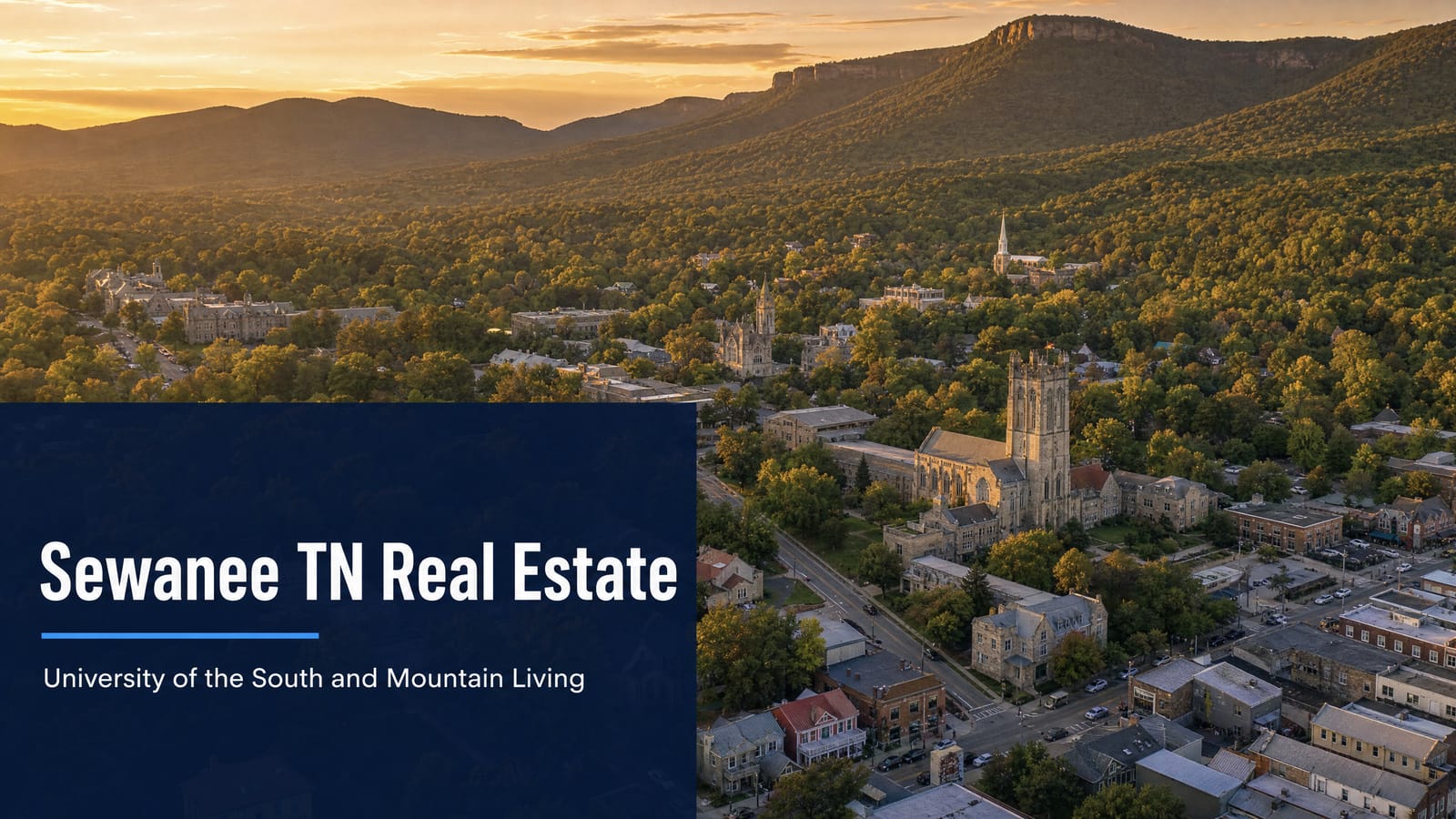
Sewanee is unlike any other community in Middle Tennessee. A small town of approximately 2,300 people perched atop the Cumberland Plateau, home to the University of the South — a private Episcopal institution with Gothic Revival architecture, a 13,000-acre domain of forested land, and 65 miles of hiking trails that most residents consider their backyard. Living in Sewanee means living at the intersection of academic culture, world-class natural beauty, and a pace of life that feels decades removed from the sprawl of Nashville 90 minutes to the northwest. For buyers looking at real estate in the broader Winchester and Franklin County market, Sewanee represents something entirely different — and understanding its unique real estate structure is essential before you make an offer.
The University Domain: A Unique Real Estate Model
The most important thing to understand about Sewanee real estate is that the University of the South owns 13,000 acres — essentially the entire plateau-top community. Most residential properties in Sewanee sit on university land under a lease arrangement rather than traditional fee-simple ownership.
How the lease system works. When you buy a home in Sewanee on the university domain, you are purchasing the house and improvements — not the land beneath it. The land is leased from the university, and the lease conveys with the sale of the home. You pay an annual lease fee to the university. This model is similar to ground-lease arrangements common in some resort and planned communities, but it is unusual for a Tennessee residential market. The lease terms, annual fees, and renewal provisions should be reviewed carefully with your attorney before purchasing.
Transfer fees. Buyers who are not qualified university employees pay a 4% transfer fee to the university on the purchase of a domain lease property. This adds a meaningful cost to your acquisition — on a $500,000 home, the transfer fee is $20,000. Factor this into your total purchase budget alongside standard closing costs.
Properties off the domain. Some properties in the broader Sewanee area — particularly along the edges of the plateau and on roads leading toward Monteagle, Cowan, and the valley floor — are fee-simple ownership on private land, not university leases. These properties follow traditional Tennessee real estate conventions with no lease fees or transfer fees. If the lease arrangement is a dealbreaker for you, off-domain properties in the immediate area provide an alternative.
What Homes Cost in Sewanee
Sewanee's real estate market is small and distinct from the broader Franklin County market.
Price range. Homes currently on the market in Sewanee range from approximately $245,000 to $975,000, with a median price around $550,000. This is significantly above the Franklin County median and above Tullahoma and Winchester — reflecting the university community's appeal, the limited inventory (few homes come on the market each year), and the premium that buyers pay for Sewanee's unique combination of natural setting and academic culture.
What you get at various price points. In the $245,000 to $400,000 range, expect smaller homes — 2 to 3 bedrooms, 1,200 to 1,800 square feet — on wooded domain lots. These homes may need updating but provide entry-level access to the Sewanee community. In the $400,000 to $700,000 range, you find well-maintained 3 to 4-bedroom homes with 2,000+ square feet on spacious wooded lots, often with stone or custom construction details that reflect the community's architectural character. Above $700,000, homes offer larger footprints, premium locations near campus or with plateau-edge views, and high-quality finishes — some properties approach $1 million.
Limited inventory. Sewanee is not a market where dozens of homes are listed at any given time. The community is small, turnover is low, and desirable properties often sell through word of mouth or to buyers who have been waiting for the right listing. If Sewanee is your target, be prepared to act quickly when a suitable property becomes available — and work with an agent who monitors the market actively.
The Mountain Living Lifestyle
Sewanee's appeal is inseparable from its physical setting on the Cumberland Plateau — approximately 2,000 feet above the surrounding valley floor.
The Domain trails. The university's 13,000-acre domain includes 65 miles of interconnected hiking and mountain biking trails. The Perimeter Trail — a 20-mile loop along the plateau rim — offers bluff-edge views that rival any trail in the Southeast. Shorter routes to specific overlooks, waterfalls, and natural features provide daily hiking options that most communities cannot match. AllTrails lists 29 trails in the immediate Sewanee area. For residents, these trails are not a weekend destination — they are the path you walk before breakfast or after dinner.
South Cumberland State Park. Adjacent to the Sewanee community, South Cumberland State Park encompasses some of Tennessee's most dramatic landscape — deep gorges, waterfalls (including the 256-foot Fall Creek Falls tributary systems), sandstone formations, and old-growth forest. Fiery Gizzard Trail, consistently rated among the top hikes in Tennessee, is accessible from the Sewanee area. For serious hikers, trail runners, and outdoor enthusiasts, living near South Cumberland provides access to world-class terrain on a daily basis.
The plateau climate. Elevation creates a microclimate noticeably different from the valley floor. Sewanee summers are cooler than Winchester or Tullahoma — often 5 to 10 degrees lower on the warmest days. Winters can be more severe, with occasional ice storms and snow that the valley avoids. The cooler temperatures and abundant forest create a mountain feel that is distinctly different from the rolling farmland of Coffee and Franklin County below.
Community character. Sewanee has the feel of a New England college town transplanted to a Southern mountaintop. The university's influence pervades daily life — public lectures, art exhibitions, concerts, visiting speakers, and the campus's Gothic architecture create a cultural environment unusual for rural Tennessee. The Sewanee Village provides a small commercial center with local businesses, and community events bridge the university and residential populations. Homes sit on spacious wooded lots with mature pines, maples, and oaks — the density is low, the canopy is high, and the feeling is forest rather than subdivision.
Who Buys in Sewanee
University faculty and staff. A significant portion of Sewanee homebuyers are connected to the university — professors, administrators, and staff who want to live within walking or biking distance of campus. University employees may receive favorable lease terms and exemption from the 4% transfer fee.
Retirees seeking mountain living. Retirees drawn to natural beauty, cultural engagement, and a small-community feel find Sewanee appealing. The university's public programming provides intellectual stimulation, the trails provide daily exercise, and the quiet pace suits retirement. The tradeoff: Sewanee is 25 minutes from Winchester and healthcare services, and 45 minutes from Tullahoma's larger medical community.
Remote workers and creatives. Writers, artists, and remote professionals who need inspiration more than proximity to an office find the mountain setting productive. Sewanee has attracted a creative community that complements the academic population. Internet connectivity in the village area supports remote work; verify speeds at specific properties.
Parents of university students. Some families purchase Sewanee properties while their children attend the university, using the home during visits and as a potential rental. Approximately one-third of Sewanee homes are rentals — university-student and community demand supports this market.
Practical Considerations
Distance to services. Sewanee has a small village center but limited retail and services. Grocery shopping, medical appointments, and most errands require a drive to Winchester (25 minutes down the mountain) or Monteagle (10 minutes on the plateau). For major shopping, dining, and hospital services, Tullahoma (45 minutes) or Chattanooga (55 minutes) are the closest options. This distance is part of Sewanee's appeal for many residents — but it is a daily reality that convenience-oriented buyers should weigh carefully.
Mountain road access. Sewanee sits atop the Cumberland Plateau, accessible from the valley via winding mountain roads. In winter, ice and occasional snow can make these roads challenging. The main routes are maintained, but residents should be comfortable with mountain driving conditions and keep vehicles winter-ready.
The lease question. The university domain lease is the single most important factor to evaluate when buying in Sewanee. Consult a real estate attorney familiar with Sewanee's lease structure before making an offer. Understand the annual fee, any escalation provisions, the lease term and renewal process, and what happens if the university changes its policies. For most long-term residents, the lease arrangement works well and is accepted as part of the Sewanee lifestyle. For buyers uncomfortable with not owning the land under their home, off-domain properties or communities in the valley below may be a better fit.
FAQ
Do you own the land when you buy a home in Sewanee?
On the university domain, no — you purchase the home and improvements on leased university land. The lease conveys with the sale. Off-domain properties in the broader Sewanee area are fee-simple ownership. Understand which structure applies to any property you consider.
What is the 4% transfer fee in Sewanee?
Non-university-employee buyers pay a 4% transfer fee to the University of the South when purchasing a domain lease property. On a $500,000 home, this adds $20,000 to your acquisition cost.
How far is Sewanee from Winchester and Tullahoma?
Sewanee is approximately 25 minutes from Winchester and 45 minutes from Tullahoma. Monteagle is about 10 minutes on the plateau. Chattanooga is approximately 55 minutes southeast.
Is Sewanee a good investment?
Sewanee's limited inventory and university-backed demand support stable property values. However, the small market, lease structure, and transfer fees make Sewanee a lifestyle purchase more than a pure investment play. Properties hold value well but may take longer to sell than homes in larger markets.
Can I rent out a home in Sewanee?
Yes — approximately one-third of Sewanee homes are rentals, supported by university-related demand. Verify any lease restrictions on rental use before purchasing, as the university domain lease may include provisions about rental activity.
Explore Sewanee Real Estate
Sewanee is a market that requires specific knowledge — the lease structure, the community dynamics, and the limited inventory all demand an agent who understands the plateau community. I can help you evaluate whether Sewanee fits your lifestyle and navigate the purchasing process, including the university lease considerations.
Contact me about Sewanee properties →
Categories: Franklin County Real Estate
Tags: sewanee, University of the South, cumberland plateau, mountain living, franklin county, hiking