
Jack Daniel's Distillery and Living in Moore County TN
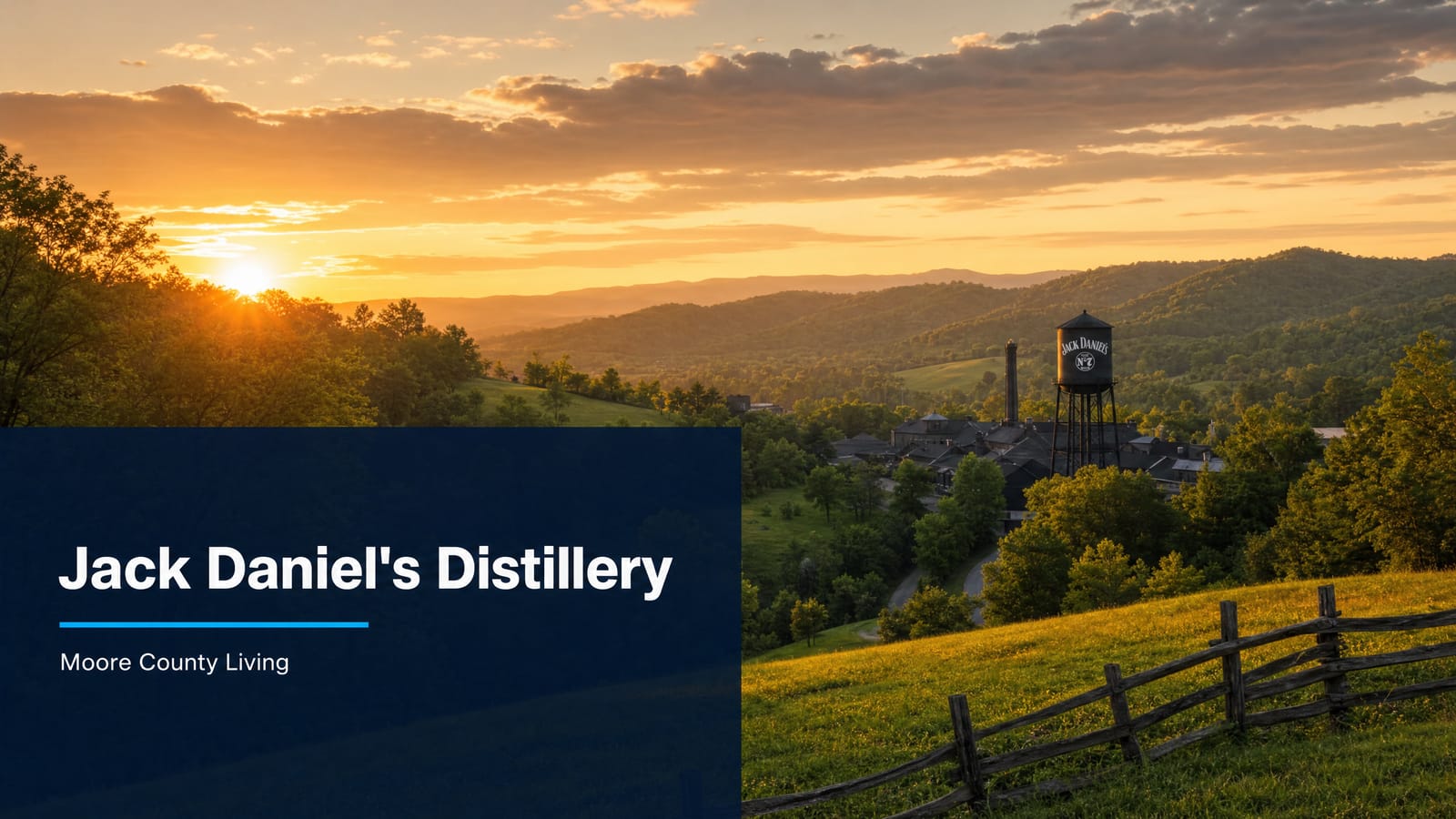
Everyone knows Jack Daniel's. Far fewer people know what it is actually like to live in Lynchburg, Tennessee — the small Moore County town that hosts the oldest registered distillery in the United States and draws over 250,000 visitors a year. Living near Jack Daniel's is not what most people imagine. The county is dry — you cannot buy the whiskey that is made here. The town square that tourists photograph is also where residents grab lunch and run errands. And the community that the distillery has anchored for over 150 years has a character that is simultaneously famous worldwide and almost completely unknown to the people who visit for an afternoon tour. If you are considering a move to the Lynchburg area, here is what life actually looks like beyond the distillery gates.
The Dry County Paradox
The most frequently asked question about Lynchburg is also the most ironic: yes, Moore County is a dry county. You cannot purchase alcohol for consumption within county limits. The distillery that produces one of the world's most recognized whiskey brands operates in a county where you cannot walk into a store and buy a bottle of it.
How this works in practice. Moore County's dry status dates to state prohibition laws passed in the early 1900s. While federal prohibition ended in 1933, Tennessee allowed counties to maintain local prohibition — and Moore County voters have kept the dry designation ever since. The distillery operates under a special provision that allows manufacturing and limited tastings (visitors can sample whiskey as part of the tour experience), but retail liquor sales are prohibited within the county.
What this means for residents. If you want to buy wine, beer, or spirits, you drive to a neighboring county — Tullahoma in Coffee County is approximately 15 to 20 minutes north, and Winchester in Franklin County is approximately 20 minutes east. For many Lynchburg residents, the dry county status is a non-issue — the drive to a neighboring town is short, and some residents view the dry designation as a community character choice rather than an inconvenience. For others, particularly those who enjoy dining with a glass of wine or hosting guests, the restriction is a genuine lifestyle consideration. Know your own priorities before committing to a Moore County address.
Lynchburg Town Square: Tourist Attraction and Neighborhood Hub
The Lynchburg town square is one of the most photographed small-town squares in Tennessee — a postcard-perfect courthouse anchored by locally owned shops, restaurants, and the steady flow of distillery visitors who wander through after their tours.
The dual identity. The square serves two populations simultaneously. Tourists browse the gift shops, eat at the restaurants, and take photos of the courthouse. Residents grab coffee, pick up hardware, visit the bank, and catch up with neighbors. The tourist economy keeps the square's businesses viable — many small Tennessee towns have lost their downtown businesses, but Lynchburg's square thrives because the distillery delivers a steady stream of customers year-round. Residents benefit from a walkable, active town center that most towns this size cannot support.
Miss Mary Bobo's Boarding House. The iconic family-style restaurant serves traditional Southern meals at communal tables — a Lynchburg institution that tourists plan their visits around and locals reserve for special occasions. Barrel House BBQ offers a more casual dining experience with smoked meats and sides. The square's shops range from general merchandise to handcrafted goods, and the seasonal calendar of events — including the annual Frontier Days celebration — adds community programming that draws both residents and visitors.
The tourism reality for residents. Living in Lynchburg means sharing your town with tourists. On busy weekends — particularly spring and fall — the square can be crowded. Traffic through town increases during peak seasons. Some residents find this energizing; others find it mildly intrusive. The tourism impact is concentrated around the square and the distillery — residential neighborhoods a few blocks away are quiet and unaffected. If you choose a home outside the immediate town center, the tourist traffic has minimal impact on your daily life.
What Moore County Offers Beyond the Distillery
The smallest county factor. Moore County has a population of approximately 6,900 — making it the third-least-populous county in Tennessee. This means genuinely small-town living at a scale that is increasingly rare. People know each other. Community events are attended by a meaningful percentage of the population. The consolidated city-county government (Lynchburg and Moore County operate as a single government) means less bureaucratic complexity than larger jurisdictions.
Cost of living. Moore County's housing costs are among the lowest in the Middle Tennessee region. The median household income is approximately $66,700, and home prices reflect the rural, small-town market. Two-to-three-bedroom homes in Lynchburg range from $150,000 to $275,000 — substantially below Coffee County (Tullahoma) and even below most of Franklin County. For buyers on a budget or retirees stretching fixed incomes, Moore County offers purchasing power that neighboring counties cannot match.
Schools. Moore County Schools operates as a small district serving the entire county. The small scale means low student-to-teacher ratios and a community where teachers know students and families personally. For families coming from larger school systems, the intimate scale is either a significant advantage (more personal attention, stronger community connection) or a limitation (fewer course offerings, fewer extracurricular options). Evaluate based on your family's specific needs.
Outdoor recreation. Moore County's rolling terrain, wooded hollows, and rural landscape provide a natural setting for hunting, fishing, horseback riding, and hiking. Tims Ford Lake is accessible from the eastern edge of the county — approximately 20 to 25 minutes from Lynchburg. The Tims Ford State Park area provides the lake recreation that Moore County itself lacks. For golfers, the Jack Nicklaus-designed Bear Trace course at Tims Ford is within a half-hour drive.
The Economic Picture
Jack Daniel's as an economic engine. The distillery is Moore County's largest employer and the anchor of a tourism economy valued at over $15.5 million annually in visitor spending — a figure that grew more than 10% from 2023 to 2024. This tourism revenue supports the square's businesses, generates tax revenue for county services, and creates jobs that would not otherwise exist in a county of this size. The distillery's presence gives Lynchburg an economic stability that most similarly sized rural Tennessee communities do not have.
Employment beyond the distillery. Local employment options outside the distillery are limited — county government, schools, small businesses, and the service industry account for most remaining jobs. Many Moore County residents commute to neighboring counties for work: Tullahoma (20 minutes) for Arnold AFB-related employment, Manchester (25 minutes) for distribution and manufacturing, and Winchester (20 minutes) for healthcare and county services. The I-24 corridor is accessible via Tullahoma or Manchester for longer commutes to Nashville (75 to 90 minutes) or Chattanooga (70 minutes).
Remote work opportunity. For remote workers, Moore County offers a compelling value equation: Nashville or Chattanooga salaries combined with Moore County housing costs create significant disposable income advantages. Internet service in Lynchburg proper supports remote work for most applications. Verify connectivity at specific addresses — rural Moore County outside town may have limited broadband options.
Honest Pros and Cons of Living in Moore County
Pros. Among the most affordable housing in Middle Tennessee. Genuinely small-town community where you know your neighbors. Active town square supported by distillery tourism. Low property taxes. Historic character and national name recognition. Consolidated government simplifies local civic engagement. Proximity to Tullahoma and Winchester services (15 to 20 minutes).
Cons. Dry county — no alcohol sales within county limits. Very limited local shopping, dining, and services beyond the square. Small school district with fewer academic and extracurricular options. Limited local employment — most workers commute. No hospital within the county (nearest is Winchester or Tullahoma). Tourist traffic on the square during peak seasons. Rural internet coverage may be inconsistent outside town center.
Buying in Moore County vs Neighboring Counties
The decision to buy in Moore County versus Tullahoma (Coffee County) or Winchester (Franklin County) comes down to priorities.
Choose Moore County if: affordability is your primary driver, you value ultra-small-town community, you work remotely or commute to Tullahoma/Manchester, you do not mind the dry county status, and you want the character of living in a nationally known small town.
Choose Tullahoma if: school quality is a top priority, you want more dining, shopping, and entertainment options within your town, you work at or near Arnold AFB, or you prefer a larger community (population 20,000+) with more local services.
Choose Winchester if: Tims Ford Lake access is essential to your lifestyle, you want a growing downtown scene with restaurants and events, you need proximity to a hospital, or you want more housing variety than Moore County offers while staying below Tullahoma prices.
FAQ
Is Moore County TN really a dry county?
Yes. Moore County has been dry since state prohibition laws took effect in the early 1900s. The Jack Daniel's Distillery operates under a special manufacturing provision but retail alcohol sales are not permitted within county limits. The nearest alcohol sales are in Coffee County (Tullahoma) or Franklin County (Winchester), each approximately 15 to 20 minutes away.
How far is Lynchburg from Tullahoma and Winchester?
Lynchburg is approximately 15 to 20 minutes from Tullahoma and approximately 20 minutes from Winchester. Both towns provide shopping, dining, healthcare, and services that Moore County's small size does not support locally.
What do homes cost in Lynchburg TN?
Homes in Lynchburg and Moore County typically range from $150,000 to $275,000 for standard 2-to-3-bedroom properties — among the most affordable in the Middle Tennessee region. Rural parcels with acreage are available at even lower price points.
Is Lynchburg TN a good place to live?
For the right buyer, yes. Lynchburg offers affordable housing, a tight-knit community, a unique town identity anchored by the distillery, and proximity to larger towns. It is not ideal for buyers who need extensive local services, diverse dining and entertainment, or who are uncomfortable with the dry county status. The detailed Lynchburg living guide covers quality of life factors in depth.
Explore Moore County Real Estate
I help buyers evaluate whether Moore County fits their priorities — and if it does, I know the neighborhoods, properties, and value opportunities in and around Lynchburg. If a neighboring county is a better fit, I will tell you that too. Let me help you find the right community.
Contact me about Lynchburg and Moore County homes →
Categories: Franklin County Real Estate
Tags: lynchburg, moore county, jack daniels, dry county, small town living, Middle Tennessee